
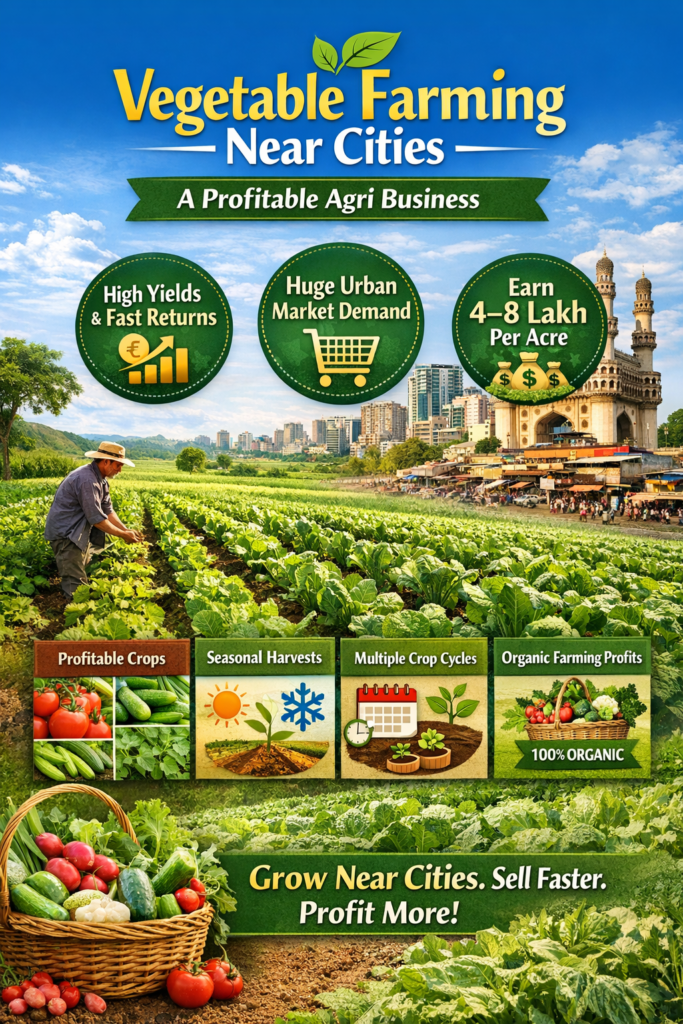
Vegetable farming has emerged as one of the most profitable and sustainable agricultural sectors in India, especially when practiced near cities and large towns. With rising urban populations and increasing demand for fresh, chemical-free food, vegetable cultivation offers high income potential, fast returns, and continuous cash flow.
📊 Why Vegetable Farming is Highly Profitable
Vegetables are short-duration, high-demand crops that provide frequent harvests. Unlike traditional crops, farmers can earn multiple incomes in a year.
- Tomato yield: 10–20 tons per acre
- Okra, bottle gourd, cucumber: 8–18 tons per acre
- Radish & leafy vegetables: quick harvest (30–60 days)
💰 Profit Potential (per acre):
- Tomato: ₹4 – ₹6 lakh (good season)
- Chilli: up to ₹8 lakh (high demand)
- Capsicum (protected farming): ₹2 – ₹5 lakh
- Okra / Cucumber: ₹60,000 – ₹1.5 lakh
👉 With proper planning, farmers can grow 2–3 crops per year, multiplying income.
🏙️ Advantage of Farming Near Cities (Like Hyderabad)
Farming near urban areas provides a major advantage:
🚀 Key Benefits:
- Direct access to large consumer markets
- Higher prices due to fresh supply demand
- Lower transportation costs
- Tie-ups with restaurants, supermarkets & local vendors
📉 In many regions, local production meets only a portion of total vegetable demand, creating a significant supply gap.
👉 This results in consistent demand + better pricing = higher profits
🥬 Types of Profitable Vegetables
🌿 Daily Demand Vegetables
- Tomato, Onion, Potato
- Brinjal, Okra (Bhindi)
- Green Chilli
👉 Always in demand → stable income
🥗 Fast-Growing Crops (Quick Returns)
- Spinach, Coriander, Lettuce
- Radish (30–45 days)
- Cucumber
👉 Enables multiple harvest cycles per year
🌶️ High-Value Crops
- Capsicum (polyhouse)
- Exotic greens
- Mushrooms
👉 Ideal for premium urban markets
⏳ Crop Duration (Tier Farming Model)
| Crop Type | Duration | Cycles/Year |
|---|---|---|
| Leafy Vegetables | 25–45 days | 6–8 cycles |
| Short-term Vegetables | 60–90 days | 3–4 cycles |
| Long-term Crops (Tomato, Chilli) | 90–150 days | 2 cycles |
👉 This tier farming approach ensures continuous income throughout the year
🌦️ Seasonal Vegetable Planning
🌞 Summer Crops
- Cucumber, Bottle Gourd, Bitter Gourd
- Okra, Brinjal
🌧️ Monsoon Crops
- Beans, Chilli, Tomato
- Gourds
❄️ Winter Crops
- Cabbage, Cauliflower
- Carrot, Beetroot
- Leafy greens
👉 Smart farmers follow seasonal rotation + market demand trends
📍 Vegetable Farming in and Around Hyderabad
Vegetable cultivation is widely practiced across the region, covering large agricultural areas and producing millions of tons annually. Multiple varieties of vegetables are grown throughout the year.
⚠️ However, demand still exceeds supply for crops like:
- Green chilli
- Leafy vegetables
- Onion
👉 This creates high-profit opportunities for farmers near Hyderabad
💡 Real Profit Strategy (Near Hyderabad)
For 1 acre farming near urban markets:
✔ Ideal crop mix:
- 40% Tomato
- 30% Leafy vegetables
- 30% Seasonal crops
✔ Expected returns:
- Minimum: ₹1.5 – ₹3 lakh/year
- Optimized (multi-cropping): ₹4 – ₹8 lakh/year
✔ With direct marketing (organic / farm-to-home):
- Income can increase 30–50% higher
🌿 Organic Farming Advantage
- Higher selling price (premium market)
- Increasing urban demand
- Better soil health & sustainability
👉 Organic vegetables are highly preferred in urban markets.
⚠️ Challenges to Manage
- Price fluctuations
- Pest and disease control
- Weather risks
- Market timing
👉 Success depends on planning, crop selection, and market linkage
🔥 Conclusion
Vegetable farming near cities is not just agriculture—it is a high-income business opportunity.
With:
- Short crop cycles
- Continuous demand
- Strong urban market access
👉 It becomes one of the best ways to generate regular income while building long-term wealth.
💡 Smart Insight:
“Land Near Cities + Vegetable Farming = Daily Income + Asset Growth”