
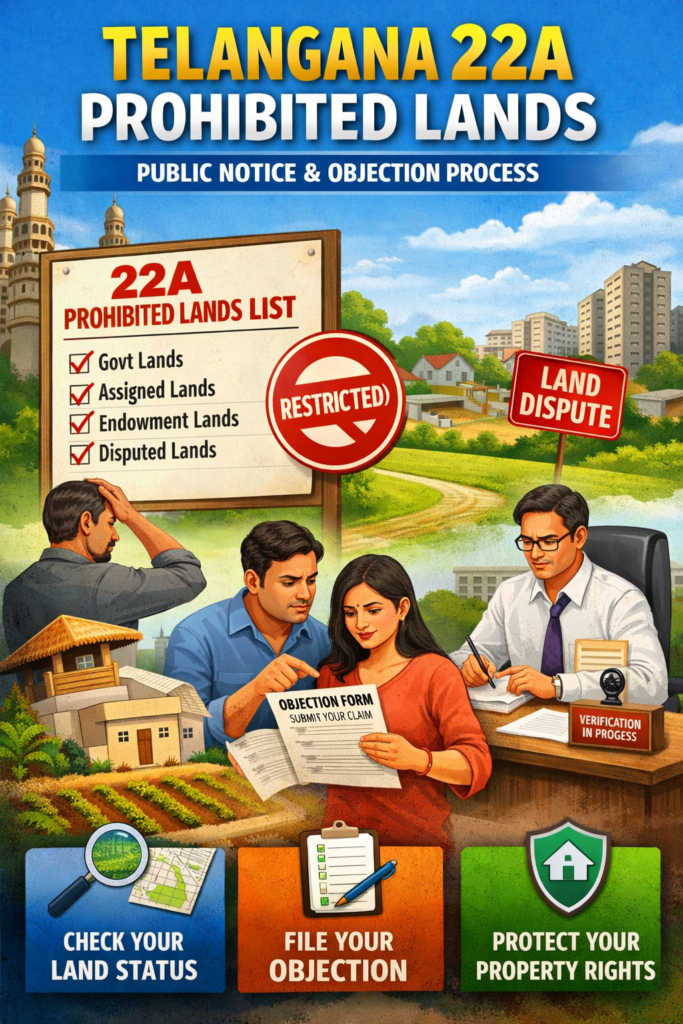
The issue of Section 22A prohibited lands in Telangana has become one of the most discussed topics in the real estate and revenue administration sectors. Thousands of landowners across the state discovered that their lands were suddenly classified as “prohibited properties,” preventing them from selling, transferring, or mortgaging their assets.
In response to growing concerns, authorities initiated a process to publish the 22A prohibited lands list publicly and invite objections before finalizing it. This move is aimed at increasing transparency and correcting wrongful entries.
What is Section 22A?
Section 22A of the Registration Act, 1908 empowers the State Government to prohibit registration of certain categories of lands. Once a property is listed under 22A:
- Sale deeds cannot be registered
- Transfers and gift deeds are blocked
- Banks may refuse loans against the property
- Development activity may come to a halt
The restriction remains in force until the land is officially removed from the prohibited list.
Types of Lands Commonly Listed Under 22A
The prohibited category generally includes:
- Government lands
- Assigned lands
- Lands reserved for public purposes (roads, tanks, canals, infrastructure)
- Endowment and Waqf lands
- Ceiling surplus lands
- Lands under court disputes
- Survey discrepancy lands
However, over time, several private pattadar lands and even approved layouts were reportedly included due to survey errors, data mismatches, or administrative oversight.
Why the Public Display of 22A List is Important
Many landowners only discovered that their property was under 22A when they attempted to register a transaction at the Sub-Registrar Office. This lack of prior notice created financial and legal stress.
To address this, the government moved toward:
- Publishing district-wise prohibited property lists
- Making survey numbers accessible online
- Allowing citizens to verify their land status
- Inviting objections before finalizing the list
This step ensures natural justice — giving property owners an opportunity to challenge wrongful classification.
Major Concerns Raised by Landowners
Across various districts, property owners raised concerns such as:
- Lands with clear pattadar passbooks appearing in the prohibited list
- Approved layouts being flagged as restricted
- No prior notice before blocking registrations
- Delays in resolving objections
In certain urban areas near Hyderabad, even large extents of residential and plotted developments were temporarily reflected under 22A, creating panic among investors and homebuyers.
Objection Process: What Landowners Should Do
If your land appears under the 22A prohibited list:
Step 1: Verify Online
Check the official Registration portal and search by district, mandal, village, and survey number.
Step 2: Collect Documents
Prepare supporting documents such as:
- Pattadar Passbook
- Title deed copies
- Encumbrance Certificate
- Layout approvals (if applicable)
- Court orders (if any)
Step 3: Submit Formal Objection
File a written objection before the designated Revenue Authority or District Collector office with proper documentation.
Step 4: Follow Up
Track the status and obtain written clarification regarding acceptance or rejection of your objection.
If administrative remedies fail, legal recourse through appropriate judicial forums remains available.
Impact on Real Estate & Banking
The 22A issue significantly affects:
- Retail land investors
- Agricultural landowners
- Developers and builders
- Financial institutions
Banks generally avoid financing lands that are under prohibited status. This affects liquidity and market value, even if the listing was made due to clerical error.
Government’s Reform Approach
The updated approach aims to:
- Reduce wrongful entries
- Digitize prohibited land data
- Improve coordination between Revenue and Registration departments
- Increase transparency through public access
These measures are part of broader land governance reforms in Telangana, where digital integration of land records is being strengthened.
Final Thoughts
Section 22A is meant to protect public interest — not to create hardship for genuine landowners. The move to publish the prohibited lands list and invite objections is a crucial step toward restoring confidence in the land registration system.
If you own land in Telangana, it is essential to:
- Regularly verify your survey number status
- Maintain updated land records
- Act immediately if your property appears in the 22A list
Proactive verification today can prevent costly legal battles tomorrow.