
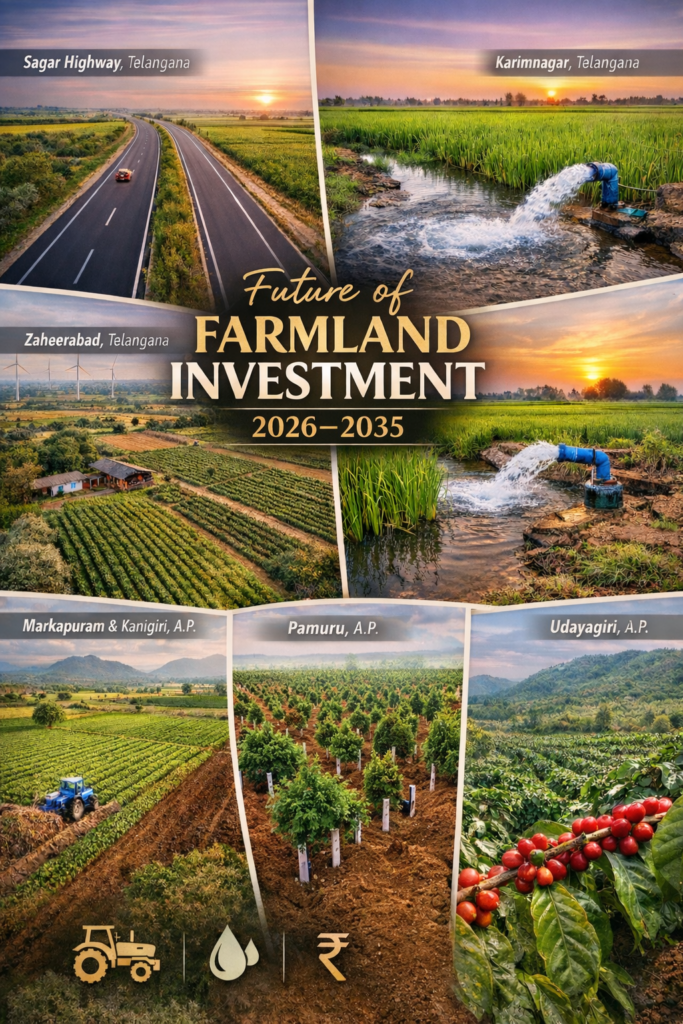
Focus: Telangana Growth Corridors & Emerging Belts of Andhra Pradesh
Farmland in India is transitioning into a high-performance, multi-dimensional investment asset. Between 2026 and 2035, the next wave of wealth creation will be driven not just by land ownership—but by location intelligence, water security, crop strategy, and infrastructure proximity.
This article delivers a highly targeted, SEO-optimized investment outlook, focusing on Telangana’s expanding corridors and emerging farmland belts in Andhra Pradesh (Markapuram, Kanigiri, Pamuru & Udayagiri regions).
1. Farmland Investment in India: 2026–2035 Macro Outlook
India’s farmland sector is entering a decade of structured growth, supported by:
- Rising food demand + population growth
- Shift toward high-value agriculture (horticulture, timber, organics)
- Infrastructure-led rural transformation
- Increasing participation from HNIs, NRIs, and agri-investors
Farmland is evolving into a triple-benefit asset:
👉 Capital appreciation
👉 Recurring agricultural income
👉 Long-term generational wealth
2. Telangana: The Core Growth Engine for Farmland Investment
Telangana is rapidly emerging as a high-growth farmland investment destination, driven by irrigation expansion, road connectivity, and Hyderabad’s outward growth.
2.1 High-Potential Farmland Corridors in Telangana (2026–2035)
1. Sagar Highway Growth Belt
(Nagarjuna Sagar Highway Influence Zone)
- Fastest expanding South Hyderabad corridor
- Increasing demand for:
- Lifestyle farms
- Weekend agricultural estates
- Strong connectivity to Hyderabad IT hubs
👉 Ideal for: Lifestyle farms + long-term appreciation
2. Nagarkurnool & Jogulamba Gadwal Belt
- Emerging as affordable entry zones
- Benefiting from:
- Highway connectivity
- Irrigation expansion
- Large land parcels available at early-stage pricing
👉 Ideal for: Bulk land acquisition + future appreciation play
3. Karimnagar Growth Zone
- One of the most stable agricultural economies in Telangana
- Strong:
- Irrigation infrastructure
- Crop productivity
- Consistent demand from local and investor markets
👉 Ideal for: Income-generating farmland + low-risk investment
4. Maharashtra Border Belt (North Telangana)
Key influence areas near:
- Nizamabad region
- Adilabad growth pockets
Drivers:
- Cross-border trade activity
- Lower land cost compared to central Telangana
- Gradual infrastructure penetration
👉 Ideal for: Long-term land banking
5. Karnataka Border Belt (South-West Telangana)
Regions near:
- Gadwal belt
- Raichur connectivity zones
Advantages:
- Access to dual-state markets
- Strong agriculture ecosystem
- Water resource potential
👉 Ideal for: Commercial farming + leasing models
6. Nanded Highway Influence Zone
(Nanded Highway Stretch)
- Strategic corridor connecting Telangana to Maharashtra
- Increasing:
- Logistics movement
- Agri-trade potential
👉 Ideal for: Agri-commercial investments + warehousing-linked farming
7. Zaheerabad Surroundings
- One of the fastest emerging farmland hotspots
- Strong industrial + agricultural mix
- Close to Karnataka border
👉 Ideal for:
- Agro-processing linked farms
- High appreciation zones
8. Narayanakhed Region
- Rapidly gaining investor attention
- Large parcels available
- Benefiting from regional road upgrades
👉 Ideal for: Early-stage investors seeking high ROI
2.2 Why Telangana Will Dominate (2026–2035)
- Massive irrigation infrastructure already in place
- Hyderabad expansion pushing land demand outward
- Increasing shift toward:
- Managed farmlands
- Organic farming
- Timber plantations
👉 Telangana offers a balanced mix of appreciation + income + liquidity
3. Andhra Pradesh: Emerging Farmland Belts (Markapuram, Kanigiri, Pamuru & Udayagiri)
Replacing saturated and high-cost zones, newly farmed and developing belts in Andhra Pradesh are gaining strong investor traction.
3.1 Markapuram Region (Prakasam Belt)
Core Strengths:
- Large-scale new agricultural land development zones
- Competitive land pricing vs coastal Andhra
- Increasing cultivation of:
- Pulses
- Groundnuts
- Commercial crops
- Plantation farming
Expansion Nodes within Markapuram Belt
Kanigiri
- Rapidly emerging as a key farmland micro-market
- Known for:
- Groundnut and tobacco cultivation
- Expanding commercial crop base
- Improving connectivity to regional trade routes
👉 Investment Edge:
- Affordable land parcels
- Strong future demand from agri-commercial players
Pamuru
- Developing as a stable agricultural zone
- Favourable for:
- Pulses
- Cotton
- Mixed farming models
- Benefiting from:
- Rural road expansion
- Increasing farming activity
👉 Investment Edge:
- Low entry cost
- Consistent agricultural productivity
Infrastructure & Growth Outlook
- State highway connectivity improving steadily
- Market access gradually strengthening
- Scope for aggregation of large farmland parcels
👉 Ideal for:
- Entry-level investors
- Large-scale farming projects
- Long-term land banking strategies
3.2 Udayagiri Belt (Nellore Region)
Key Strengths:
- Untapped fertile farmland zones
- Suitable for:
- Horticulture
- Rain-fed commercial crops
- Low competition from institutional investors
Growth Drivers:
- Expansion of rural connectivity
- Increasing agricultural activity
- Future irrigation potential
👉 Ideal for:
- Long-term appreciation (10–15 years)
- Agri-entrepreneurship ventures
3.3 Why These Andhra Regions Matter
- Early-stage investment cycle
- Low entry cost → high upside potential
- Suitable for:
- Organic farming
- Commercial agriculture
- Long-term wealth creation
👉 These regions represent pre-growth markets before mainstream discovery
4. Investment Models That Will Win (2026–2035)
High-Return Categories
- Timber plantations (teak, sandalwood)
- Fruit orchards (mango, guava)
- Vegetable clusters near urban demand centers
- Organic-certified farms
Hybrid Concepts
- Lifestyle + income farms
- Managed farmland projects
- Agro-based experiential assets
Infrastructure-Led Strategy
Focus on land near:
- Highways
- State roads
- Agri-markets
- Processing units
👉 Connectivity acts as a primary value multiplier
5. Risk Analysis (Ground Reality Check)
Key Risks:
- Water dependency
- Crop price volatility
- Title and legal verification issues
- Lower short-term liquidity compared to urban real estate
👉 Smart Strategy:
Invest only in clear-title, water-secured, well-connected farmland
6. 2026–2035 Forecast Summary
Telangana
- Strong 5–10 year appreciation cycles
- High liquidity across key corridors
- Driven by infrastructure + irrigation expansion
Andhra Pradesh (Markapuram, Kanigiri, Pamuru, Udayagiri)
- Early-stage high-growth zones
- Strong long-term upside (10–15 years)
- Ideal for patient, strategic investors
Conclusion
The future of farmland investment in India lies in regional intelligence and early entry:
- Telangana → Immediate growth + income + liquidity
- Markapuram, Kanigiri, Pamuru & Udayagiri → Long-term, high-upside emerging markets
Farmland is no longer a passive asset—it is evolving into:
✔ A productive income generator
✔ A strategic inflation hedge
✔ A generational wealth builder