
Why the First Monsoon Is Critical for a Healthy Red Sandalwood Plantation
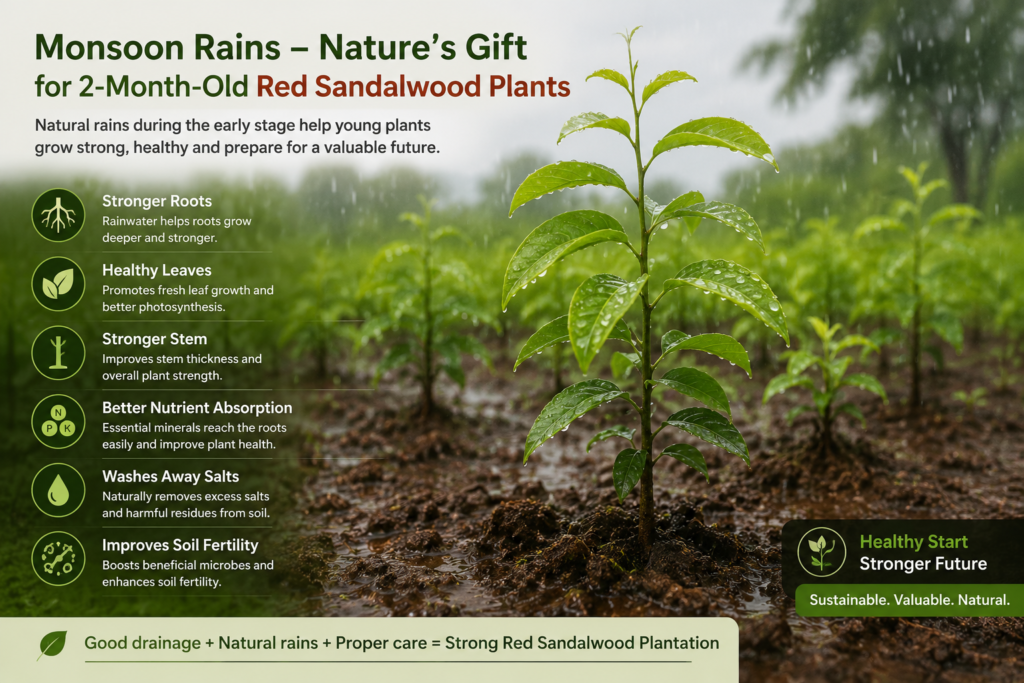
The first few months after planting are the most important in the life of a Red Sandalwood (Pterocarpus santalinus) tree. During this early establishment stage, especially when the plants are around two months old, natural monsoon rains play a vital role in building a healthy root system, vigorous foliage, stronger stems, and fertile soil.
Unlike artificial irrigation, rainfall wets the soil uniformly, replenishes natural moisture, activates beneficial soil organisms, and improves the availability of essential nutrients. However, while Red Sandalwood thrives in moist conditions, good drainage is essential, as prolonged waterlogging can damage young roots.
1. Deep and Strong Root Development
At two months of age, Red Sandalwood plants focus on developing an extensive root system.
Natural rainfall helps by:
- Maintaining uniform soil moisture.
- Encouraging roots to grow deeper into the soil.
- Promoting lateral root development.
- Improving root stability.
- Helping young plants establish quickly after planting.
A healthy root system enables the tree to absorb more water and nutrients while improving drought tolerance in the future.
2. Faster Leaf Growth and Better Photosynthesis
Leaves are responsible for producing the energy required for plant growth.
Adequate rainfall helps:
- Produce fresh, healthy leaves.
- Maintain green foliage.
- Improve chlorophyll production.
- Increase photosynthesis.
- Generate more carbohydrates for overall growth.
Healthy leaves directly contribute to stronger roots, stems, and long-term tree development.
3. Stronger Stem Development
The young stem undergoes rapid growth during the rainy season.
Proper soil moisture:
- Supports healthy cell expansion.
- Increases stem thickness.
- Improves water and nutrient movement.
- Reduces heat stress.
- Strengthens the plant against wind damage.
A stronger stem provides the structural foundation for future tree growth.
4. Improved Nutrient Absorption
Rainwater naturally carries dissolved nutrients into the root zone.
Essential nutrients include:
- Nitrogen (N) – promotes leaf growth.
- Phosphorus (P) – supports root development.
- Potassium (K) – strengthens stems and improves stress tolerance.
- Calcium (Ca) – develops strong cell walls.
- Magnesium (Mg) – required for chlorophyll formation.
- Sulfur (S) – supports protein synthesis.
Micronutrients such as iron, zinc, manganese, boron, and copper also become more available under optimal soil moisture.
5. Natural Removal of Excess Salts
Continuous irrigation can sometimes lead to salt accumulation around plant roots.
Monsoon rainfall naturally:
- Flushes excess salts deeper into the soil.
- Reduces salt stress around roots.
- Improves nutrient uptake.
- Maintains healthier soil conditions.
This natural leaching process helps create a better environment for young Red Sandalwood plants.
6. Rainwater Improves Soil Fertility
Rain stimulates biological activity within the soil.
Benefits include:
- Faster decomposition of organic matter.
- Increased microbial activity.
- Improved nutrient cycling.
- Better soil structure.
- Enhanced moisture retention.
Healthy soils create healthier plantations.
7. Better Soil Aeration
After rainfall, well-drained soils develop improved pore spaces that allow oxygen to reach the roots.
Benefits include:
- Easier root penetration.
- Better oxygen availability.
- Improved microbial activity.
- Healthier root respiration.
Proper drainage is especially important because young Red Sandalwood plants are sensitive to prolonged waterlogging.
8. Lower Soil Temperature
Monsoon weather naturally cools the soil.
Lower temperatures help:
- Reduce heat stress.
- Decrease water loss.
- Improve plant metabolism.
- Support continuous growth.
This allows the plant to focus more energy on development rather than survival.
9. Natural Cleaning of Leaves
Rainfall washes away:
- Dust particles.
- Air pollutants.
- Salt deposits.
- Debris from leaf surfaces.
Cleaner leaves absorb more sunlight and perform photosynthesis more efficiently.
10. Increased Soil Biological Activity
Moist soil creates ideal conditions for beneficial organisms.
After rainfall:
- Beneficial bacteria multiply.
- Fungi become active.
- Earthworms improve soil structure.
- Organic matter breaks down faster.
These natural processes continuously improve soil health and fertility.
11. Reduced Irrigation Costs
A healthy monsoon significantly reduces dependence on irrigation.
Benefits include:
- Lower water consumption.
- Reduced electricity and pumping costs.
- Conservation of groundwater.
- More sustainable plantation management.
Natural rainfall is both environmentally and economically beneficial.
12. Long-Term Plantation Benefits
Healthy growth during the first few months lays the foundation for decades of successful plantation development.
Early monsoon benefits include:
- Stronger root architecture.
- Healthier stems and foliage.
- Better drought resilience.
- Higher plant survival rates.
- Improved long-term growth potential.
- Enhanced prospects for quality heartwood formation as the tree matures.
Best Plantation Practices During the Rainy Season
To maximize the benefits of monsoon rainfall:
- Ensure excellent field drainage.
- Avoid standing water around young plants.
- Remove weeds regularly.
- Apply organic mulch while keeping it away from the stem.
- Monitor for fungal diseases during prolonged wet periods.
- Conduct regular plantation inspections.
- Maintain proper spacing between plants for good air circulation.
Conclusion
Monsoon rains are one of nature’s greatest gifts for young Red Sandalwood plantations. During the first two months after planting, natural rainfall strengthens roots, encourages lush leaf growth, develops stronger stems, improves nutrient absorption, enhances soil fertility, and naturally removes excess salts from the root zone.
When combined with scientific plantation management, proper drainage, and regular maintenance, the first monsoon creates a strong biological foundation for healthy trees that can thrive for decades.
A well-established Red Sandalwood plantation begins with healthy early growth—and the monsoon season plays a major role in making that possible.