
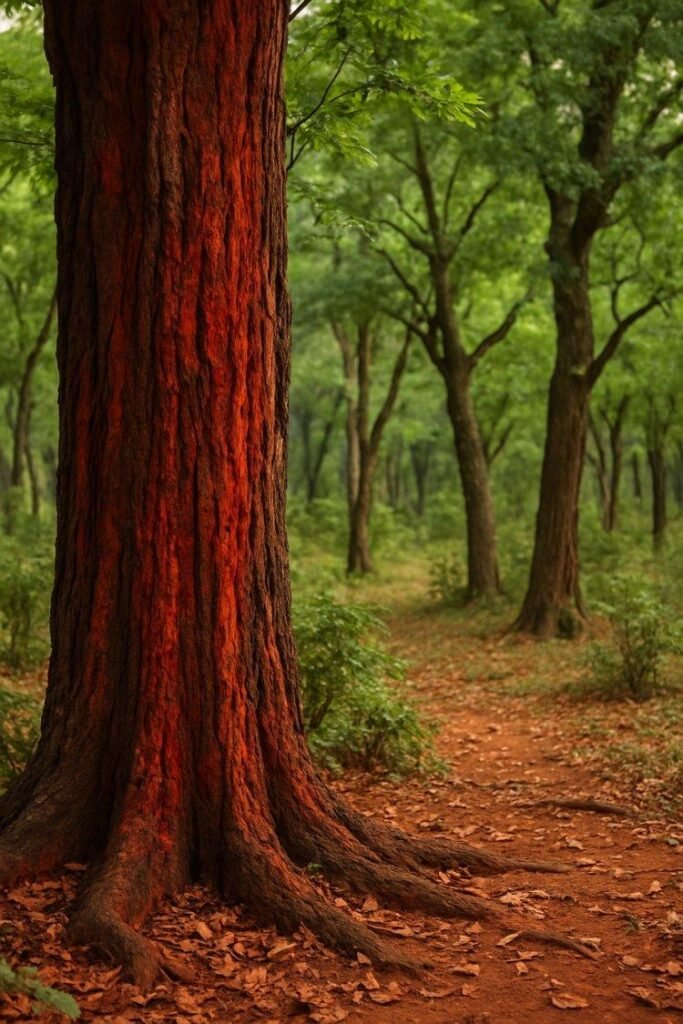
Red Sandalwood: India’s Spiritual Treasure with Global Value
Red Sandalwood (Pterocarpus santalinus), popularly known as Red Sanders or Erra Chandanam, is one of India’s most precious and culturally significant tree species. Revered in Indian traditions and naturally endemic to the Eastern Ghats, this rare hardwood has been valued for thousands of years for its beauty, durability, medicinal significance, and international demand.
Today, Red Sandalwood is emerging as one of India’s most promising agroforestry crops, offering long-term income opportunities while supporting biodiversity conservation and sustainable farming.
A Tree Deeply Rooted in Indian Culture
Red Sandalwood occupies a special place in India’s spiritual and cultural heritage. According to local traditions in Andhra Pradesh, the tree is closely associated with the sacred Tirumala hills and Lord Sri Venkateswara. For centuries, its wood has been used in temples, sculptures, traditional handicrafts, musical instruments, and religious artifacts.
Its rich crimson heartwood symbolizes prosperity, purity, and longevity, making it one of the most respected timber species in Indian culture.
Native Home: The Eastern Ghats of Andhra Pradesh


7
Red Sandalwood is endemic to the Eastern Ghats, with its natural distribution concentrated in Andhra Pradesh. The species is primarily found in:
- Markapur region
- Kadapa (YSR Kadapa)
- Chittoor
- Nellore
- Nallamala and Seshachalam hill ranges
These regions provide the unique red soils, dry climate, and rocky terrain required for the tree’s natural growth. Andhra Pradesh remains the world’s most significant natural source of Red Sandalwood.
Why Red Sandalwood Is So Valuable
Several factors contribute to the exceptional value of Red Sandalwood:
- Rare geographical distribution
- Extremely slow-growing hardwood
- Beautiful deep-red heartwood
- High density and durability
- Strong international demand
- Limited legal supply
Its heartwood is widely used in:
- Premium furniture
- Luxury handicrafts
- Musical instruments
- Decorative carvings
- Ayurvedic applications
- Collectible wood products
Growing global demand, coupled with limited natural availability, has made Red Sandalwood one of India’s most sought-after timber species.
Government Reforms Supporting Cultivation
Recognizing the economic and ecological importance of sandalwood species, the Government of India has introduced several policy initiatives to encourage legal cultivation and improve market access.
The Sandalwood Development Committee, chaired by former Finance Secretary Ratan P. Watal, recommended reforms aimed at:
- Simplifying licensing procedures
- Supporting farmer-friendly cultivation policies
- Improving marketing systems
- Strengthening security against theft
- Promoting sustainable sandalwood development across India
These recommendations seek to make sandalwood cultivation more attractive while protecting valuable natural resources.
Additionally, policy measures now encourage cultivation of Red Sandalwood outside natural forests, helping reduce pressure on wild populations while creating new livelihood opportunities for farmers.
Environmental Benefits
Beyond its commercial value, Red Sandalwood contributes significantly to environmental sustainability.
Benefits include:
- Carbon sequestration
- Soil conservation
- Biodiversity enhancement
- Climate resilience
- Agroforestry diversification
- Reduced pressure on natural forests through plantation-grown timber
Cultivated plantations also support long-term ecological restoration in suitable landscapes.
Red Sandalwood Farming: A Long-Term Opportunity
Red Sandalwood is a long-duration tree crop that requires scientific plantation management, regular monitoring, and legal compliance. Farmers and investors increasingly adopt managed plantation models that include:
- Quality planting material
- Drip irrigation
- Scientific pruning
- Organic nutrient management
- Security infrastructure
- Long-term plantation maintenance
With proper management and compliance with applicable regulations, Red Sandalwood plantations can become a valuable component of diversified farm income.
Sudhena Agro Farms: Promoting Sustainable Red Sandalwood Plantations
Sudhena Agro Farms is among the organizations promoting professionally managed Red Sandalwood plantations in Andhra Pradesh.
The company has developed:
- 650+ acres of managed plantations
- 2.10+ lakh Premium Red Sandalwood trees
- Partnerships with 1,200+ happy landowners
- Scientific plantation management focused on long-term sustainability
Its plantation model emphasizes responsible cultivation, transparent management, and conservation-oriented agroforestry.
The Future of Red Sandalwood
As legal cultivation expands, conservation policies improve, and global demand continues to rise, Red Sandalwood is expected to play an increasingly important role in India’s agroforestry sector.
For farmers, it represents an opportunity to diversify income through long-term tree farming. For the country, it offers a pathway to conserve a globally unique species while supporting rural livelihoods and sustainable economic growth.
Conclusion
Red Sandalwood is far more than a valuable timber tree—it is a symbol of India’s cultural heritage, biodiversity, and sustainable agricultural future. With supportive government reforms, scientific plantation practices, and increasing awareness, responsibly cultivated Red Sandalwood plantations have the potential to benefit farmers, investors, and the environment alike.
Whether viewed as a sacred tree, a conservation priority, or a long-term agroforestry asset, Red Sandalwood continues to stand among India’s most remarkable natural treasures.