
Red Sandalwood (Pterocarpus santalinus) is emerging as one of the world’s most valuable agroforestry assets. Native to the Eastern Ghats of Andhra Pradesh, India, this premium hardwood is prized for luxury furniture, musical instruments, pharmaceuticals, cosmetics, handicrafts, and traditional medicine. As global demand continues to outpace legal supply, Red Sandalwood plantations are attracting long-term investors and progressive farmers alike.
Global Market Set for Strong Growth
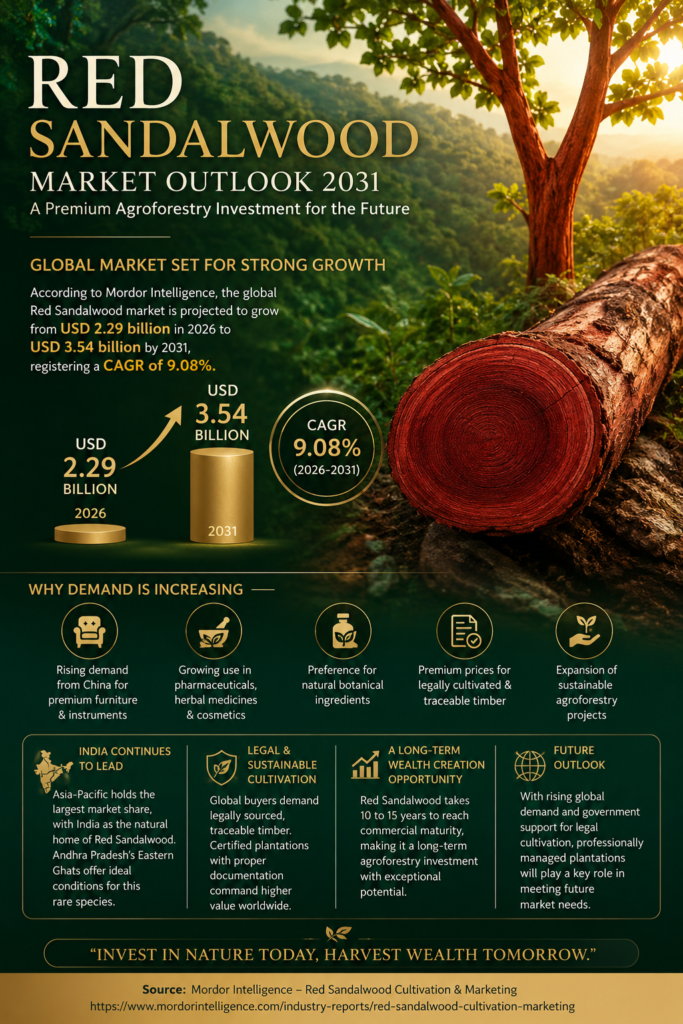
According to the latest industry analysis, the global Red Sandalwood market is projected to grow from USD 2.29 billion in 2026 to USD 3.54 billion by 2031, registering a compound annual growth rate (CAGR) of 9.08%. This growth is being driven by increasing international demand, expanding pharmaceutical applications, and the rise of certified agroforestry plantations.
Why Demand Is Increasing
Several factors are contributing to the rapid expansion of the Red Sandalwood market:
- Rising demand from China for premium furniture and musical instruments.
- Growing use of Red Sandalwood extracts in herbal medicines and cosmetics.
- Increasing preference for natural botanical ingredients by global wellness brands.
- Premium prices for legally cultivated and fully traceable timber.
- Expansion of sustainable agroforestry projects supported by private investment.
India Continues to Lead
The Asia-Pacific region accounts for the largest share of the global market, with India remaining the natural home of Red Sandalwood. Andhra Pradesh’s Eastern Ghats provide ideal climatic conditions for cultivating this rare species, making the state a strategic location for managed plantation projects.
The Importance of Legal and Sustainable Cultivation
Global buyers increasingly demand legally sourced and traceable timber. Certified plantations with proper documentation, sustainable management practices, and transparent ownership are expected to command higher value in international markets. Compliance with export regulations and traceability standards is becoming a key competitive advantage for growers.
A Long-Term Wealth Creation Opportunity
Red Sandalwood is not a short-term crop. It generally requires 10 to 15 years to reach commercial maturity, making it a long-term agroforestry investment. However, the combination of limited natural supply, increasing global demand, and sustainable plantation development has strengthened its long-term investment outlook.
Future Outlook
As governments encourage legal cultivation and international markets continue to seek certified Red Sandalwood, professionally managed plantation projects are expected to play an increasingly important role in meeting global demand. For investors seeking a long-term, nature-based asset with wealth creation potential, Red Sandalwood plantations represent a unique opportunity when supported by scientific management, legal compliance, and sustainable forestry practices.