
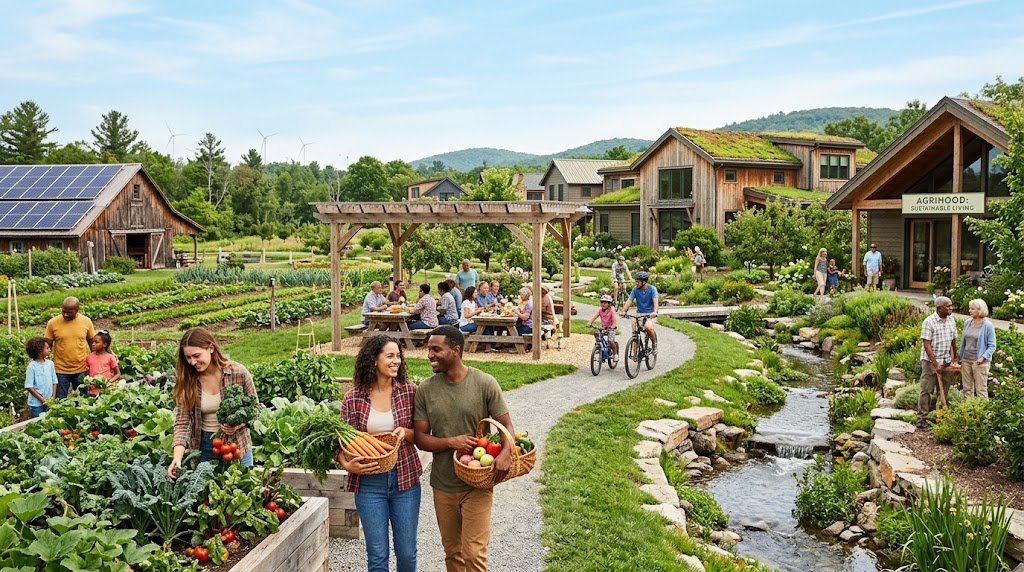
In an era dominated by sprawling concrete jungles, endless commutes, and increasingly detached food systems, a quiet revolution is taking root. Across the globe, communities are trading golf courses for organic farms, asphalt for winding green paths, and isolation for shared harvests.
Welcome to the Agrihood—a modern residential development that integrates working farmland and sustainable agricultural practices directly into the community’s master plan.
Agrihoods are not merely a lifestyle trend or a nostalgic nod to agrarian roots; they are a vital design framework for a sustainable, resilient, and thriving future. Here is why embracing agrihoods is one of the most powerful steps we can take toward restoring our food, water, air, and health.
1. Reclaiming Our Food: From Farm to Fork in Feet, Not Miles
The average piece of produce in a conventional grocery store travels over 1,500 miles before reaching your plate. Along the way, it loses nutritional value, generates significant carbon emissions, and relies heavily on chemical preservatives to survive the journey.
The Agrihood Advantage:
- Hyper-Local, Nutrient-Dense Food: In an agrihood, fresh fruits, vegetables, herbs, and honey are harvested steps from your doorstep.
- Regenerative Practices: Most agrihoods prioritize organic, chemical-free, and regenerative farming practices that replenish the soil rather than depleting it.
- Food Security: By maintaining a localized food supply, agrihood communities become resilient against global supply chain disruptions and food shortages.
2. Restoring Our Water: Smart Hydration & Ecological Balance
Conventional urban and suburban developments are notoriously hard on regional water systems—leading to stormwater runoff, contaminated waterways, and excessive water waste.
The Agrihood Advantage:
- Cyclical Water Systems: Agrihoods integrate rainwater harvesting, greywater recycled irrigation, and bioswales into their design.
- Permeable Landscapes: Instead of vast stretches of impermeable concrete, living soil and cover crops act as natural sponges, filtering pollutants and recharging underground aquifers.
- Soil Moisture Retention: Healthy, organic soil managed through regenerative farming retains moisture far better than monoculture lawns, drastically reducing the overall need for irrigation.
3. Cleansing Our Air: Natural Bio-Filters for Cooler, Cleaner Living
Urban heat islands, high carbon emissions, and industrial airborne pollutants have severely degraded the air quality in urban and suburban environments alike.
The Agrihood Advantage:
- Carbon Sequestration: Living trees, perennial plants, and undisturbed farm soils naturally absorb and store carbon dioxide, actively combating climate change.
- Mitigating Heat Island Effects: Expansive green foliage cools the local ambient temperature naturally, reducing energy demand for cooling homes.
- Natural Oxygenation: Diverse ecosystems produce clean, oxygen-rich air, filtering out particulate matter and urban pollutants.
4. Revitalizing Human Health: Nourishing Body, Mind, and Community
The true magic of an agrihood extends beyond environmental benefits; it fundamentally alters human well-being. Modern lifestyles face dual epidemics of chronic illness and social isolation. Agrihoods offer an organic solution to both.
+-----------------------------------------------------------------------+
|                       THE AGRIHOOD WELLNESS TRIAD                      |
|                                                                       |
|   [ Physical Vitality ]   <--->   [ Mental Wellbeing ]                |
|           ^                               ^                           |
|           |                               |                           |
|           +-------> [ Social Connection ] <---+                           |
+-----------------------------------------------------------------------+
Key Health Benefits:
- Physical Vitality: Access to clean, unprocessed, pesticide-free food reduces inflammation and chronic disease risks while encouraging active outdoor living.
- Mental Wellbeing: Regular contact with nature (biophilia) reduces cortisol levels, alleviates stress, and improves focus and mental clarity.
- Social Connection: Gardening circles, community harvest dinners, and shared workshops foster deep, meaningful bonds among neighbors, counteracting loneliness and building authentic community resilience.
The Path Forward: How to Join the Agrihood Movement
Whether you are a developer, urban planner, homebuyer, or passionate environmental advocate, there are many ways to support and adopt the agrihood vision:
- Advocate for Conscious Planning: Encourage municipal leaders and developers to prioritize working green spaces over traditional, resource-heavy amenities like golf courses.
- Transform Your Community: You don’t need a multi-acre master-planned community to start—transform backyard gardens, vacant lots, and neighborhood association lawns into shared micro-farms or food forests.
- Support Local Regenerative Farms: If moving to an agrihood isn’t immediately possible, support Community Supported Agriculture (CSA) programs and local urban farming initiatives in your city.
Conclusion: Planting the Seeds of Tomorrow
Agrihoods prove that we do not have to choose between modern convenience and ecological harmony. By placing working, sustainable agriculture at the heart of where we live, we create communities that heal the land while nourishing the people who call them home.
It’s time to move away from isolated suburban sprawl and step into a vibrant future where our food, water, air, and health flourish side by side.
What are your thoughts on agrihoods? Would you live in a farm-centered community? Let us know in the comments below!