
1. Introduction: A Rare and High-Value Tree
Srigandham (Indian Sandalwood – Santalum album) is one of the most valuable tree species in the world, known for its fragrant heartwood and premium essential oil. Unlike conventional timber crops, its value is derived from multiple high-demand products, making it a luxury agro-forestry asset.
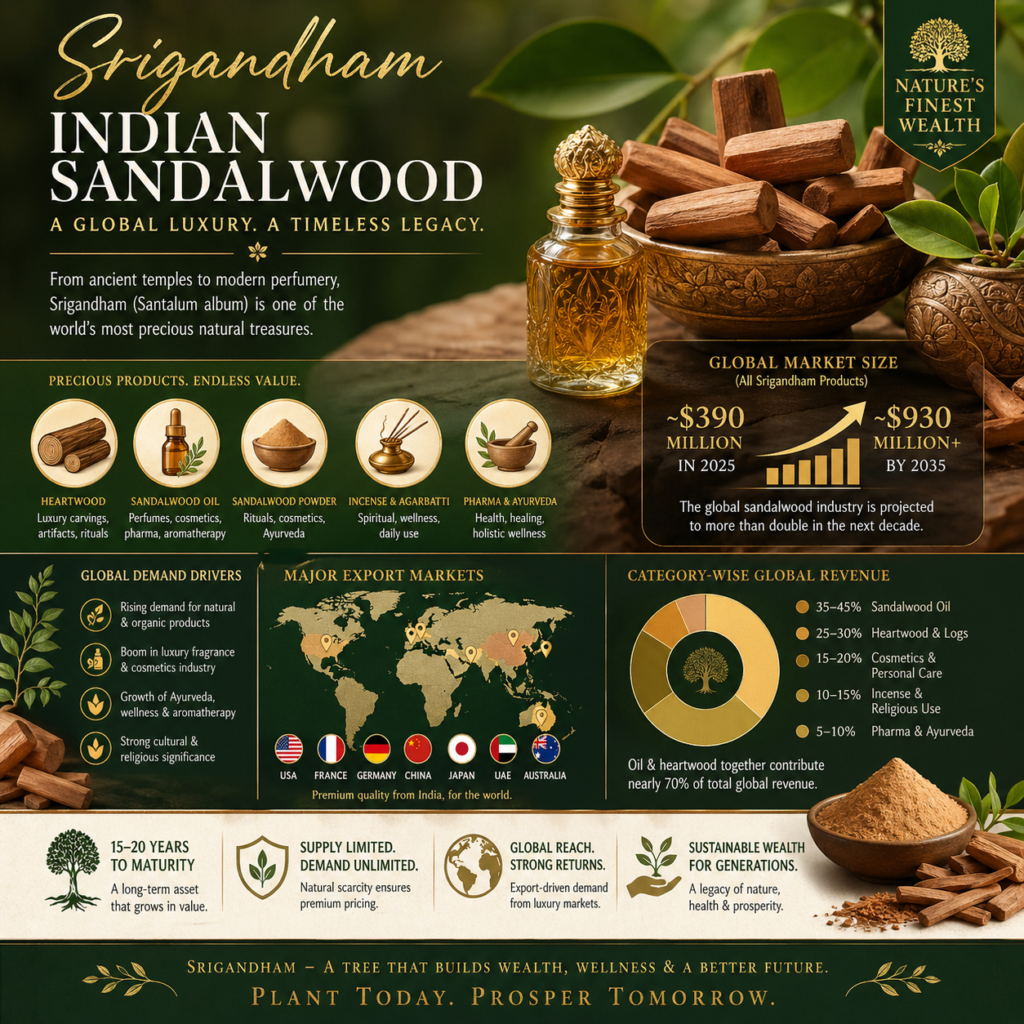
With a growth cycle of 15–20 years and highly limited global supply, sandalwood has evolved into a high-demand, supply-constrained international commodity.
2. Key Commercial Products of Srigandham
A. Heartwood (Primary Revenue Source)
The heartwood is the most valuable portion of the tree, formed at the core as it matures.
Key uses:
- Luxury carvings and artifacts
- Religious and temple applications
- Incense and powder production
- Raw material for oil extraction
👉 Contributes approximately 70–80% of total tree value
B. Sandalwood Oil (Highest Value Output)
Extracted mainly from heartwood and roots, sandalwood oil is one of the most expensive natural oils globally.
Applications:
- Premium perfumes and fragrances
- Cosmetics and skincare
- Pharmaceuticals
- Aromatherapy
📊 Global Market Size (Approximate):
- 2024: ~$170–175 million
- Expected by 2030–2033: ~$260–330 million
- Annual growth rate: ~6–8%
👉 Natural sandalwood oil dominates the market with a significant share due to its purity and therapeutic properties.
C. By-products and Secondary Revenue Streams
- Sandalwood Powder
Widely used in cosmetics, rituals, and Ayurveda - Incense & Agarbatti Industry
Major consumer in India and Asian markets - Handicrafts & Luxury Goods
Sculptures, decorative items, and premium gifting - Pharmaceutical & Ayurvedic Uses
Known for anti-inflammatory and antimicrobial benefits - Wood Chips & Residues
Used in distillation and incense manufacturing
3. Global Demand Drivers
🌍 Key Growth Factors
- Rising preference for natural and organic products
- Expansion of the luxury fragrance industry
- Growth in Ayurveda, wellness, and aromatherapy sectors
- Strong cultural and religious demand in Asia
📊 The personal care and cosmetics segment alone contributes a significant portion of sandalwood oil consumption globally.
4. India’s Position in the Market
India plays a crucial role as:
- A major consumer of sandalwood products
- A premium producer of Santalum album
- A traditional supplier of high-quality Mysore sandalwood
The domestic market is driven by:
- Religious usage
- Incense industry
- Ayurveda and wellness products
5. Major Export Markets
Srigandham products, especially oil and heartwood, are exported to high-value international markets.
🌎 Key Importing Countries
- United States – perfumes and cosmetics
- France – luxury fragrance industry
- Germany – aromatherapy and pharmaceuticals
- China – traditional medicine and incense
- Japan – cultural and ritual use
- UAE – perfumery and re-export hub
- Australia – processing and blending
👉 India, along with Australia and parts of Southeast Asia, supplies the majority of global demand.
6. Total Global Business Value
🌐 Global Market Size (All Srigandham Products)
- Current estimate: ~$350–400 million
- Expected by 2035: ~$900 million+
👉 This includes:
- Heartwood and log trade
- Essential oil market
- Cosmetics and fragrance industry
- Pharmaceutical and wellness sectors
7. Category-wise Global Revenue Distribution
| Category | Share | Estimated Value |
|---|---|---|
| Sandalwood Oil | 35–45% | $170M – $300M |
| Heartwood & Logs | 25–30% | $120M – $250M |
| Cosmetics & Personal Care | 15–20% | $70M – $150M |
| Incense & Religious Use | 10–15% | $50M – $120M |
| Pharma & Ayurveda | 5–10% | $20M – $80M |
👉 Oil and heartwood together account for nearly 70% of total global revenue
8. Supply Constraints and Price Advantage
⚠️ Key Challenges
- Illegal harvesting and smuggling
- Long maturation period (15–20 years)
- Limited natural forest availability
- Regulatory restrictions
👉 These factors create a consistent demand-supply gap, ensuring premium pricing in global markets
9. Strategic Opportunity for Farmland Investors
Srigandham stands out due to:
- Multiple revenue streams
- Strong export demand
- High-value positioning in luxury markets
- Long-term wealth creation potential
💡 Value Drivers
- Heartwood formation quality
- Oil content and composition
- Tree age and maturity
10. Conclusion
Srigandham is not just a plantation crop—it is a globally traded luxury commodity with deep cultural, economic, and industrial significance.
- Demand is driven by luxury, wellness, and tradition
- Supply remains limited and regulated
- Market value is projected to more than double in the next decade
👉 For farmland investors, it represents a unique combination of agriculture, scarcity, and high-value global demand.
🌱 Final Insight
With a global industry approaching $1 billion in value, Srigandham plantations—when managed scientifically—offer one of the most promising opportunities in agro-forestry, combining long-term capital growth with premium market demand.