
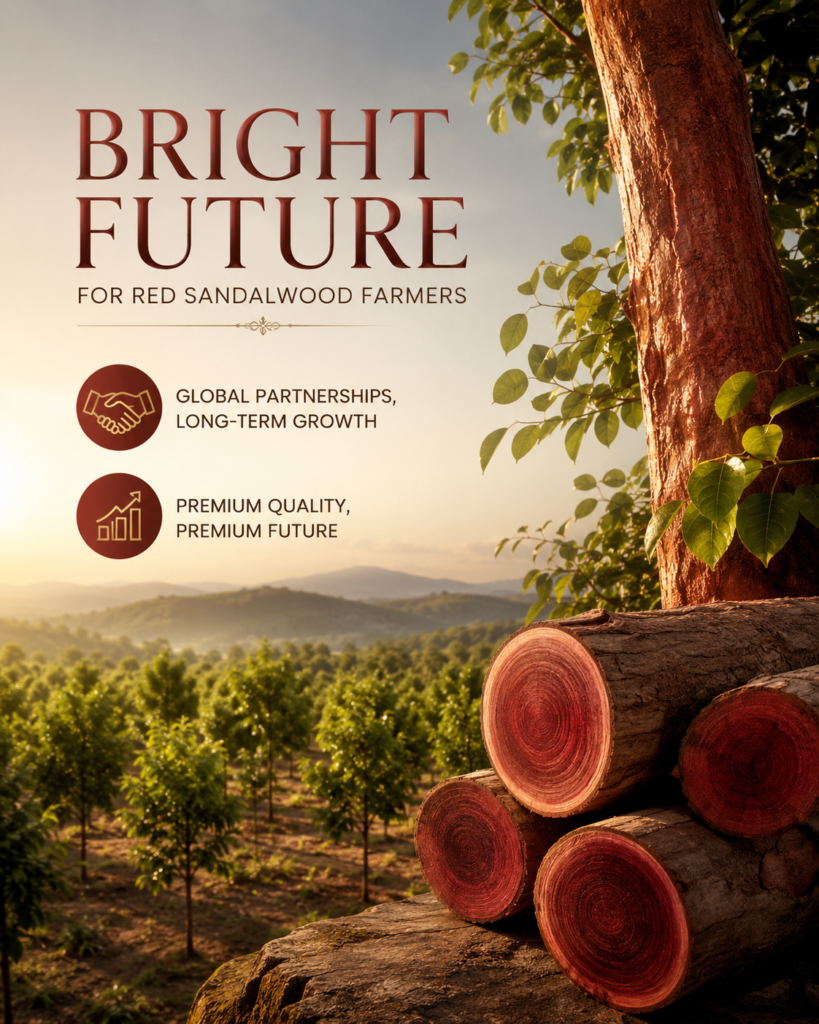
Bright Future Ahead for Artificially Propagated Red Sandalwood Farmers
Artificially propagated Red Sandalwood cultivation is emerging as one of India’s most promising long-term agroforestry opportunities. Driven by rising international demand, limited global supply, and increasing acceptance of plantation-grown timber, the sector is poised for significant growth in the coming decades.
Among the countries expected to play a major role in this transformation are China and Japan—two of Asia’s largest consumers of premium hardwood products. Industry observers believe that companies from these nations may increasingly look toward India’s Red Sandalwood plantations to secure future supplies of high-quality timber through strategic partnerships, advance purchase agreements, and long-term investments.
The Global Demand Story
Red Sandalwood (Pterocarpus santalinus) is one of the world’s most valuable specialty timbers. Renowned for its deep red color, durability, rarity, and cultural significance, it is widely used in:
- Luxury furniture
- Premium handicrafts and carvings
- Musical instruments
- Decorative veneers
- High-end interior décor
- Collectibles and specialty wood products
As harvesting from natural forests becomes increasingly restricted and sustainability gains importance worldwide, plantation-grown Red Sandalwood is becoming the preferred source for future supply.
China continues to be a major consumer of premium hardwood products, while Japan’s long-standing appreciation for rare and high-quality timber creates additional demand. Together, these markets represent a significant long-term opportunity for Indian Red Sandalwood growers.
Why International Companies May Enter Plantation Farming
Unlike many agricultural commodities, Red Sandalwood requires years of growth before producing commercially valuable heartwood. Establishing plantations today is essential to meeting future demand.
To secure reliable supplies, international buyers may increasingly explore direct engagement with plantation owners and farmers through various models.
Advance Purchase Agreements
One likely approach is the provision of advance funding against future harvests. Under such arrangements, companies may support farmers during the plantation period while securing access to future timber production.
Strategic Investments and Acquisitions
Companies seeking long-term supply security may invest directly in plantation projects or acquire mature plantations located in high-quality growing regions.
Long-Term Supply Partnerships
International buyers may establish long-term relationships with farmers, providing technical guidance, quality standards, and assured procurement opportunities.
These models are already widely practiced in forestry and agricultural sectors around the world and could become increasingly relevant for Red Sandalwood.
Quality Starts with Location
One of the most important factors determining the value of Red Sandalwood is the quality of heartwood produced.
Not all regions are equally suited for premium Red Sandalwood cultivation. Factors influencing quality include:
- Climate
- Soil composition
- Rainfall patterns
- Elevation
- Temperature variations
- Plantation management practices
Historically, the Eastern Ghats region of Andhra Pradesh has been recognized for producing some of the world’s finest Red Sandalwood. Locations with proven agro-climatic suitability are expected to attract greater attention from future investors and buyers.
Regions such as Markapuram and surrounding areas possess favorable conditions that support healthy tree growth and heartwood formation, making them strategically important for the future of plantation-based Red Sandalwood cultivation.
Benefits for Farmers
The increasing participation of international buyers could create substantial opportunities for Red Sandalwood farmers.
Better Market Access
Growing international demand can expand the number of potential buyers and improve market reach.
Improved Price Realization
Premium-quality timber from suitable locations may command higher valuations as competition among buyers increases.
Access to Capital
Advance funding mechanisms can help farmers manage plantation development costs and improve long-term financial planning.
Technical Expertise
Global buyers often encourage best management practices that improve timber quality, productivity, and harvest value.
Generational Wealth Creation
Unlike conventional seasonal crops, Red Sandalwood plantations have the potential to become long-term appreciating assets capable of creating wealth across generations.
Andhra Pradesh’s Strategic Advantage
Andhra Pradesh occupies a unique position in the global Red Sandalwood ecosystem.
The state benefits from:
- Naturally suitable agro-climatic conditions
- Historical association with premium Red Sandalwood
- Increasing farmer awareness and plantation development
- Expanding infrastructure and logistics networks
- Strong road, rail, port, and airport connectivity
- Growing industrial corridors and economic activity
These advantages make the region particularly attractive for future plantation investments and global supply-chain partnerships.
A Transformational Opportunity
The Red Sandalwood sector is gradually evolving from a niche forestry activity into a globally relevant plantation asset class. Limited natural supply, rising international demand, and increasing preference for sustainably cultivated timber are creating strong long-term fundamentals.
While market dynamics and regulations will continue to evolve, the outlook remains highly encouraging for farmers cultivating Red Sandalwood in suitable agro-climatic regions.
If current trends continue, China and Japan could become major drivers of the next growth phase in Red Sandalwood plantations, bringing new opportunities for farmers, plantation owners, and investors alike.
Looking Ahead
Red Sandalwood is no longer viewed merely as a tree crop. It is increasingly being recognized as a strategic long-term asset linked to sustainable forestry, global demand, and generational wealth creation.
For farmers growing artificially propagated Red Sandalwood in high-quality yield locations, the future appears brighter than ever. The plantations being established today could become the foundation of tomorrow’s international timber supply chains, creating lasting value for farming families and future generations.