
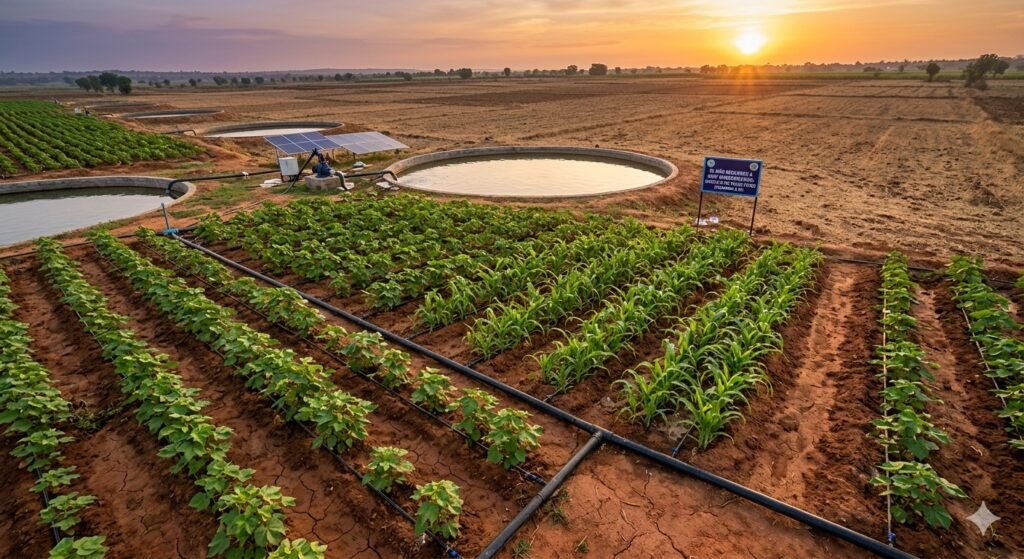
As farmers, we all know that the weather is our most unpredictable business partner. With El Niño actively disrupting weather patterns across the globe, bringing erratic monsoons, intense heat waves, and severe dry spells, managing our water is no longer just about keeping crops alive—it’s about survival.
When El Niño hits, the agricultural communities that survive and thrive are those that adapt quickly. By looking at how different states and countries manage extreme water scarcity, we can adopt world-class strategies right on our own acreage.
Here is a global breakdown of how different regions handle El Niño-induced droughts, along with actionable takeaways you can implement today.
Global Comparison: How Different Regions Fight Drought
Different regions face distinct geographical challenges, forcing them to innovate with unique water-saving technologies. The table below highlights what major agricultural hubs are doing to preserve their yields:
| Region / Country | Primary Challenge | Key Water & Irrigation Strategy | Takeaway for Local Farmers |
|---|---|---|---|
| India (e.g., Punjab, Maharashtra, Karnataka) | Weak or delayed monsoons, rapid depletion of groundwater. | Extensive construction of decentralized farm ponds, check dams, and micro-reservoirs. Shift toward short-duration alternative crops like millets and pulses. | Capture the runoff: Store your own water during early, erratic downpours. |
| Australia (Eastern Wheat Belt & Murray-Darling Basin) | Multi-year droughts, extreme heat spikes, and strict water allocations. | Advanced IoT soil moisture sensors, computer-driven precision drip systems, and strict volumetric water budgeting. | Measure, don’t guess: Water strictly based on real-time root-zone data, not standard calendars. |
| Vietnam (Mekong Delta Region) | Decreased river flows leading to severe saltwater intrusion into irrigation networks. | “Alternate Wetting and Drying” (AWD) for rice crops; constructing sluice gates to block saltwater; shifting to shrimp-crop rotation systems. | Strategic Deficit: Crops like rice do not need constant flooding; controlled drying saves water without losing yield. |
| Thailand (Central Plains) | Delayed planting cycles and reservoir exhaustion. | Shifting completely away from a second rice crop to less water-intensive field crops; state-enforced canal rotation schedules. | Crop Diversification: Never rely on a single water-heavy crop when an El Niño cycle is active. |
3 High-Impact Irrigation Practices to Implement Right Now
You don’t need a government-sized budget to implement global best practices. Here are three highly effective irrigation shifts you can execute on your farm this season:
1. Transition to Targeted Micro-Irrigation
Traditional flood irrigation can lose up to 50% of its volume to evaporation and runoff before it ever reaches the plant roots. Transitioning to drip systems or micro-sprinklers ensures water goes precisely where it matters: the root zone. If drip lines aren’t feasible for your crop type, utilize ridge-and-furrow planting configurations to channel water efficiently down compressed lanes.
2. Implement Night-Time and Cool-Hour Watering
When midday temperatures soar during El Niño cycles, up to 30% of irrigated water can evaporate in mid-air or off the top-soil before absorption. Shift your irrigation schedule to late evening (after 8:00 PM) or early morning (before 6:00 AM). This gives the soil maximum time to soak in the moisture during cooler hours.
3. Practice Deficit Irrigation and Smart Scheduling
Stop irrigating based on the day of the week. Invest in affordable, manual tensiometers or digital soil moisture meters to check root-zone moisture. For many crops, you can safely apply 15–20% less water during vegetative growth stages without hurting the final harvest, saving that vital water for critical flowering and fruiting cycles.
Agronomic Tricks: Keeping the Moisture in Your Soil
Managing the irrigation system is only half the battle; you also have to protect the water once it hits the dirt.
- Mulch Aggressively: Use crop residues, straw, or plastic sheeting to cover bare soil. This physical barrier traps moisture underneath and prevents the scorching El Niño sun from baking your topsoil dry.
- Adopt Conservation Tillage: Minimize deep plowing. Every time you flip the soil, you release trapped moisture into the air. Zero or reduced-till farming preserves the underground soil structure, helping it hold onto water far longer.
- Weed Control is Water Control: Weeds are aggressive water thieves. Keep your fields clear of weeds during a dry spell, as they will actively steal moisture and nutrients away from your primary cash crops.
The Bottom Line
El Niño is a harsh reminder that water is our most precious input. By moving away from flood irrigation, capturing local runoff, and protecting soil moisture, we can buffer our farms against the worst of the drought.
Look at what works globally, start small on your own acreage, and let’s protect our livelihoods through smarter water management!